Why Phase Fresnel Matters
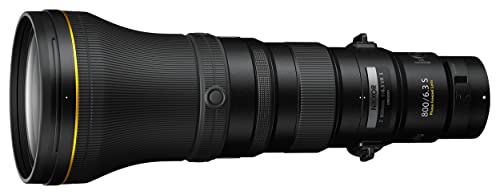
Traditional super telephotos are long, heavy and expensive. The Phase Fresnel element allows Nikon to shorten the lens and reduce weight significantly, making a very long prime practical to carry on foot or handhold for short periods.
Owners report excellent sharpness even wide open. Colour and contrast are strong, and the lens pairs well with high-resolution Z bodies. The trade-off is occasional unusual flare from bright light sources, which can show as coloured rings.
Handling in the Field
While light for its focal length, it is still a substantial lens. Owners often use a monopod, gimbal or beanbag. Its compact size allows it to fit into backpacks that would not fit older super telephotos.
Vibration reduction is effective and synchronised with body stabilization on supported bodies. Handheld shooting is possible for short periods, especially with Z8 or Z9 bodies.
Who Should Buy It (and Who Should Skip It)
Buy it if you are a dedicated bird photographer who needs maximum reach, a professional wildlife shooter who travels and wants a manageable super telephoto, or someone working from hides where subjects remain distant.
Skip it if you shoot mixed wildlife at varying distances, where a zoom offers more flexibility, or if your budget is limited. The Z 180-600mm is far more practical for most enthusiasts.
Against Nikon Other Long Lenses
The Z 180-600mm is a fraction of the cost and covers a wide range. It is the better choice for most wildlife photographers, though not as sharp and slower at the long end.
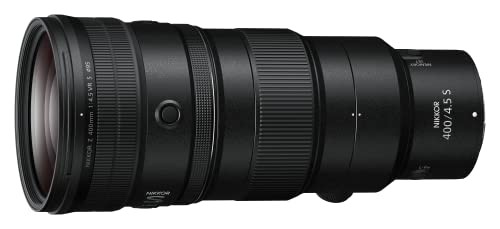
The Z 600mm f/6.3 VR S is smaller and lighter, ideal for travel. The Z 400mm f/4.5 VR S is brighter and pairs well with teleconverters, offering flexibility and portability.
Owning It: Support, Cases and Owner Feedback
Expect to buy a gimbal head or monopod, a protective case or backpack, and spare batteries for long days. A rain cover is useful in harsh weather. Teleconverters extend reach but slow focus.
Learning to track small birds at such a long focal length takes practice. Common complaints are the price, the fixed focal length and the occasional flare pattern from the Phase Fresnel element.
Image Quality on High-Resolution Bodies
Paired with a high-resolution body such as the Z8 or Z9, the lens resolves fine feather detail and texture even wide open, so owners rarely feel the need to stop down. That consistency matters because light is often limited at dawn and dusk, when wildlife is most active.
Background blur at this focal length is smooth and separates subjects cleanly from foliage and water. Combined with the reach, this produces the kind of intimate, frame-filling images that are difficult to achieve with a zoom and heavy cropping.
Frequently Asked Questions
Yes, for short periods thanks to its relatively light design and vibration reduction, though support is helpful for longer sessions.
It is a special optical element that reduces the length and weight of telephoto lenses while maintaining image quality.
Yes, it supports Nikon Z teleconverters, though autofocus slows slightly.
It is sharper and has more reach, but the zoom is more flexible and much cheaper.