Why People Still Buy This Lens
The EF 85mm f/1.8 has been in production for a very long time, and its appeal is simple: it gives a flattering portrait perspective with a bright aperture at a modest cost. On a full-frame body it compresses features nicely; on APS-C it becomes a tight headshot lens.
Autofocus uses a ring type motor that is fast and quiet, and owners report that it handles events and candid portraits well. That focus speed is something many budget primes still lack.
Image Quality, Fringing and Flare
Wide open, the lens is reasonably sharp in the centre with a slight glow. Stopped down a little, detail improves considerably. Background blur is smooth for portraits at typical distances.
The main weakness is purple fringing around bright edges, such as backlit hair or branches against sky. Editing software can remove much of it, but it is a common owner complaint. Older coatings mean flare appears more easily when shooting into the sun.
Who Should Buy It (and Who Should Skip It)
It suits beginner portrait photographers on a budget, event shooters who need a fast short telephoto without spending heavily, and APS-C users who want a bright headshot lens. Each gets strong value.
Skip it if you shoot mostly backlit outdoor portraits where fringing is noticeable, or if you work professionally and need the rendering and build of an L or Art lens.
Compared with Its Upgrades and Rivals
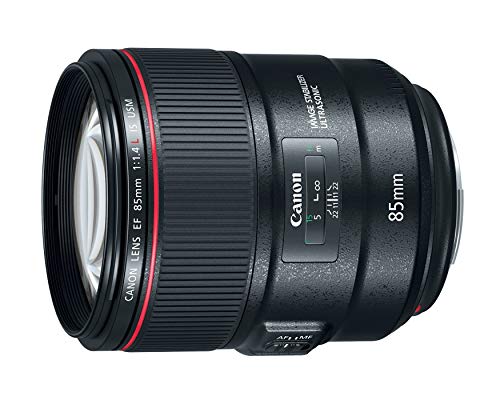
The Canon EF 85mm f/1.4L IS USM offers a brighter aperture, stabilization, sealing and cleaner rendering. For professional portrait work, it is clearly better, though much more expensive and heavier.
The Sigma 85mm f/1.4 Art is sharper still with gorgeous blur but is heavy. The RF 85mm F2 Macro adds stabilization and close focus and is the better pick for RF only shooters, though autofocus is slower and noisier.
Ownership Tips and What to Add
Buy a lens hood if one is not included, as it helps with flare. A simple reflector improves portraits greatly. RF owners need an EF to RF adapter. Consider an editing workflow with fringe removal.
There is almost no learning curve beyond practising shooting wide open with precise eye focus. The most common complaint is fringing, followed by the slightly dated feel of the build.
Adapted to Mirrorless: A Second Life
Many owners now use this lens on Canon RF bodies through the official adapter, and the pairing works better than its age suggests. Eye detection on modern bodies removes the old frustration of missed focus at wide apertures, so more frames land sharp on the eye than they ever did on older DSLRs.
In-body stabilization on bodies such as the R6 Mark II or R8 also helps steady slower shutter speeds indoors, which partly covers the missing optical stabilization and makes this inexpensive prime a genuinely useful portrait tool again.
Frequently Asked Questions
Yes, it gives a flattering perspective and smooth blur, which is why it remains popular despite its age.
Yes, and it becomes a tight short telephoto, ideal for headshots and some sports.
It is noticeable in high contrast scenes but can usually be corrected in editing software.
Yes, with an EF to RF adapter, and it benefits from modern eye detection autofocus.