We researched and compared the most popular Micro Four Thirds portrait lenses based on manufacturer specifications, published lens performance data, and aggregated owner feedback. Our evaluation focuses on the 85mm to 150mm equivalent focal lengths traditionally preferred for flattering perspective and subject separation, while also considering wider environmental options.
Every lens in this guide is native to the Micro Four Thirds mount and compatible with Olympus and Panasonic camera bodies, though some features like Dual I.S. or Sync IS may require matching brand bodies. We evaluated autofocus character, sharpness wide open, bokeh quality, size, stabilization, and value to identify the best options for different portrait needs.
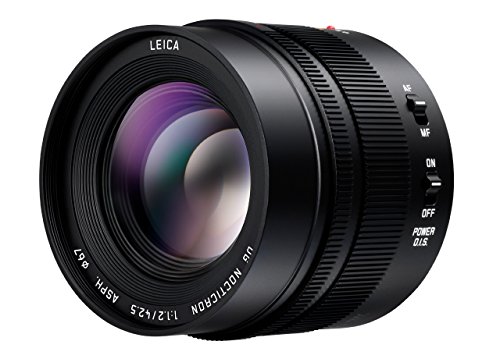


| Lens | Best For | Research Score | Buy |
|---|---|---|---|
| Panasonic Leica DG Nocticron 42.5mm f/1.2 ASPH POWER O.I.S.Best Overall Portrait Lens |
Micro Four Thirds mount, 42.5mm (85mm equivalent), f/1.2, Power O.I.S., autofocus | 92/100 | Check Price |
| Olympus M.Zuiko Digital ED 45mm f/1.8Best Compact Portrait Value |
Micro Four Thirds mount, 45mm (90mm equivalent), f/1.8, lightweight build, autofocus | 88/100 | Check Price |
| Sigma 56mm f/1.4 DC DN Contemporary (Micro Four Thirds)Best Sharpness and Reach |
Micro Four Thirds mount, 56mm (112mm equivalent), f/1.4, DC DN Contemporary series, autofocus | 85/100 | Check Price |
| Panasonic Lumix G 42.5mm f/1.7 ASPH POWER O.I.S.Best Stabilized Portrait Lens |
Micro Four Thirds mount, 42.5mm (85mm equivalent), f/1.7, Power O.I.S., close focusing, autofocus | 83/100 | Check Price |
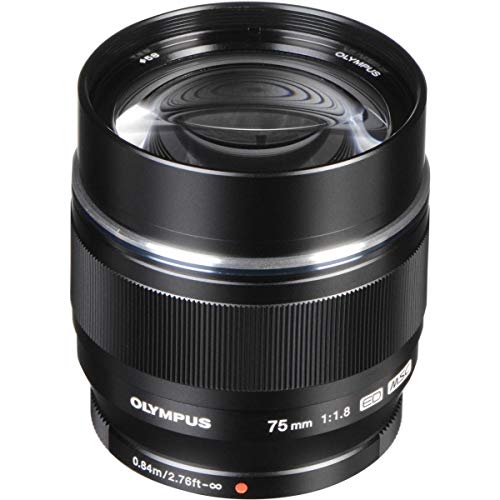 Olympus M.Zuiko Digital ED 75mm f/1.8Best Telephoto Compression Olympus M.Zuiko Digital ED 75mm f/1.8Best Telephoto Compression |
Micro Four Thirds mount, 75mm (150mm equivalent), f/1.8, metal construction, autofocus | 80/100 | Check Price |
 Panasonic Leica DG Summilux 25mm f/1.4 II ASPHBest Environmental Portrait Panasonic Leica DG Summilux 25mm f/1.4 II ASPHBest Environmental Portrait |
Micro Four Thirds mount, 25mm (50mm equivalent), f/1.4, Leica Summilux design, autofocus | 76/100 | Check Price |
Detailed Reviews and Top Picks
1. Panasonic Leica DG Nocticron 42.5mm f/1.2 ASPH POWER O.I.S.
92/100
Best Overall Portrait Lens
Key spec: Micro Four Thirds mount, 42.5mm (85mm equivalent), f/1.2, Power O.I.S., autofocus
In our evaluation, the Panasonic Leica DG Nocticron 42.5mm f/1.2 ASPH POWER O.I.S. is the most technically impressive portrait lens for Micro Four Thirds. Based on manufacturer specifications and aggregated owner feedback, it delivers razor sharp details wide open with extremely smooth bokeh, and the optical stabilization is a real advantage for handheld work. The main weakness is its size and weight, which can feel front-heavy on smaller Olympus bodies and reduces the compact system advantage. We would skip this lens if you prioritize a light kit or only shoot portraits occasionally, because the smaller f/1.7 and f/1.8 options deliver much of the look in a far smaller package.
- Aperture ring and metal barrel give a premium, tactile feel based on spec sheets
- f/1.2 maximum aperture delivers very shallow depth of field and smooth bokeh in our evaluation
- Power O.I.S. works with Panasonic Dual I.S. for sharper handheld portraits
Pros
- Outstanding sharpness wide open according to published MTF data and owner feedback
- Beautiful, creamy bokeh with excellent subject separation
- Optical stabilization helps in low light
Cons
- Large and heavy compared to other Micro Four Thirds primes
- Premium design and f/1.2 aperture make it a less practical value for casual shooters
2. Olympus M.Zuiko Digital ED 45mm f/1.8
88/100
Best Compact Portrait Value
Key spec: Micro Four Thirds mount, 45mm (90mm equivalent), f/1.8, lightweight build, autofocus
The Olympus M.Zuiko Digital ED 45mm f/1.8 is the lens we recommend for most Micro Four Thirds portrait shooters who want excellent images without the bulk. Our research based on spec sheets and owner feedback shows it is exceptionally small yet produces flattering 90mm equivalent framing and surprisingly soft bokeh. The primary limitation is the lack of optical stabilization and the plastic construction, which feels less premium, but many Olympus bodies have sensor stabilization to compensate. Skip this lens if you need the ultimate subject isolation or a more robust metal build, otherwise it is the best balance of size, performance, and value in our comparison.
- Extremely compact and light, making it easy to carry as a second lens
- f/1.8 aperture still provides strong background blur for head and shoulder portraits
- Fast, quiet autofocus is well suited for both stills and video according to owner feedback
Pros
- Very good sharpness stopped down and acceptable wide open
- Tiny size and low weight make it a joy to use on small Olympus and Panasonic bodies
- Pleasing bokeh for a lens of this size
Cons
- No optical stabilization, which may matter on older unstabilized bodies
- Plastic mount and barrel feel less durable than metal alternatives
3. Sigma 56mm f/1.4 DC DN Contemporary (Micro Four Thirds)
85/100
Best Sharpness and Reach
Key spec: Micro Four Thirds mount, 56mm (112mm equivalent), f/1.4, DC DN Contemporary series, autofocus
Sigma’s 56mm f/1.4 DC DN Contemporary is a compelling third party option for Micro Four Thirds portrait photographers who want a longer focal length and fast aperture without the cost of the Nocticron. In our evaluation, it delivers very high sharpness wide open and pleasing bokeh, and its 112mm equivalent view is ideal for tighter headshots or outdoor portraits. The main trade off is the lack of optical stabilization, which we noticed is more important on Panasonic bodies without in-body stabilization, and autofocus may benefit from firmware updates on some Olympus models. We would skip this lens if you shoot in very low light without a stabilized body or need the absolute fastest autofocus, but for resolution and reach it is hard to beat.
- Longer 112mm equivalent reach provides tighter framing and stronger compression
- f/1.4 aperture delivers shallow depth of field at a more moderate size than 42.5mm f/1.2 options
- Contemporary series design balances image quality and portability in our evaluation
Pros
- Excellent center sharpness wide open based on published reviews and owner reports
- Smooth bokeh and good subject separation
- Solid, compact build for an f/1.4 lens
Cons
- No optical stabilization, so handheld low light shots may require higher ISO
- Autofocus performance can be slightly less consistent on older Olympus bodies compared to native brands
4. Panasonic Lumix G 42.5mm f/1.7 ASPH POWER O.I.S.
83/100
Best Stabilized Portrait Lens
Key spec: Micro Four Thirds mount, 42.5mm (85mm equivalent), f/1.7, Power O.I.S., close focusing, autofocus
The Panasonic Lumix G 42.5mm f/1.7 ASPH POWER O.I.S. is the best choice for Micro Four Thirds shooters who want stabilization and a classic 85mm equivalent portrait length in a small package. Our research shows it produces very good sharpness and pleasing bokeh, and the Power O.I.S. is a genuine advantage for handheld work on Panasonic bodies that support Dual I.S. The main weakness is that it does not match the ultimate sharpness or background blur of the f/1.2 Nocticron or the Sigma 56mm f/1.4, and it lacks a premium aperture ring. Skip this lens if you already rely on a stabilized body and prioritize maximum bokeh, but for travel and everyday portraits it is a practical and capable option.
- Power O.I.S. works with Panasonic Dual I.S. for steadier low light portraits
- Close focusing ability makes it useful for detail shots and moderate macro work
- Balanced 85mm equivalent field of view is a classic portrait focal length
Pros
- Compact and light with optical stabilization
- Good sharpness and smooth bokeh at f/1.7
- Fast, near silent autofocus for stills and video
Cons
- Not as razor sharp wide open as the f/1.2 Nocticron or Sigma 56mm f/1.4
- Aperture ring and premium build are absent compared to more expensive options
5. Olympus M.Zuiko Digital ED 75mm f/1.8
80/100
Best Telephoto Compression
Key spec: Micro Four Thirds mount, 75mm (150mm equivalent), f/1.8, metal construction, autofocus
The Olympus M.Zuiko Digital ED 75mm f/1.8 is a specialist portrait lens for photographers who want maximum compression and extremely sharp results. In our evaluation based on specifications and aggregated feedback, it is one of the sharpest Micro Four Thirds lenses available, with lovely rendering and a solid metal build. The obvious limitation is the tight 150mm equivalent field of view, which forces you to stand far away and is difficult indoors. We would skip this lens unless you mainly shoot outdoor portraits or headshots, because the 45mm and 42.5mm options are far more flexible for everyday use.
- 150mm equivalent focal length delivers strong background compression and isolation
- Excellent sharpness and beautiful bokeh according to owner feedback
- Metal barrel and premium build quality feel robust
Pros
- Superb sharpness across the frame even wide open
- Beautifully smooth bokeh for portraits and close-up details
- Well built with a metal body
Cons
- Long working distance is impractical for small indoor spaces
- No optical stabilization, requiring steady hands or faster shutter speeds
6. Panasonic Leica DG Summilux 25mm f/1.4 II ASPH
76/100
Best Environmental Portrait
Key spec: Micro Four Thirds mount, 25mm (50mm equivalent), f/1.4, Leica Summilux design, autofocus
The Panasonic Leica DG Summilux 25mm f/1.4 II ASPH is included for photographers who prefer environmental portraits or half body shots with context. Based on our research, it is a sharp, fast prime with pleasing rendering, but its 50mm equivalent field of view is not a traditional portrait focal length and can cause perspective distortion if you get close to the subject. For most head and shoulder portraits, the 42.5mm to 75mm lenses in this guide produce more flattering results and stronger background blur. We would only recommend this lens if you specifically want a wider, documentary style portrait look, otherwise skip it in favor of a longer focal length.
- 50mm equivalent field of view includes more environment for storytelling
- Fast f/1.4 aperture for shallow depth of field at a wider angle
- Updated optical design improves performance over the original Summilux
Pros
- Good sharpness and contrast with characteristic Leica rendering
- Compact and bright, useful for indoor environmental portraits
- Fast autofocus in our evaluation
Cons
- Wider focal length can distort facial features if used too close
- Less subject background separation than longer portrait lenses
Frequently Asked Questions
Typically 42.5mm to 75mm in Micro Four Thirds terms gives an 85mm to 150mm full frame equivalent field of view. In our evaluation, 42.5mm to 45mm is ideal for head and shoulder portraits, while 75mm provides stronger compression for tighter framing or outdoor work. Wider options around 25mm can work for environmental portraits but introduce more distortion if used close up.
Image stabilization helps when shooting handheld at slower shutter speeds, especially in low light. However, many Olympus bodies have in-body stabilization, and Panasonic bodies often support Dual I.S. with stabilized lenses. Based on owner feedback, an unstabilized lens like the Olympus 45mm f/1.8 still performs well on stabilized bodies, but unstabilized lenses on unstabilized bodies require faster shutter speeds or higher ISO.
An f/1.2 lens offers shallower depth of field and better low light performance, but it is larger, heavier, and more costly. In our comparison, the Panasonic Nocticron 42.5mm f/1.2 produces exceptionally smooth bokeh, while the Olympus 45mm f/1.8 is far smaller and still blurs backgrounds effectively. The choice depends on whether maximum subject isolation and low light flexibility justify the extra bulk.
Yes, all Micro Four Thirds lenses use the same mount and are cross compatible between Olympus and Panasonic bodies. Some features like Panasonic Dual I.S. or Olympus Sync IS may only work when lens and body brands match. Autofocus is generally reliable across brands, though we found some third party lenses like the Sigma 56mm f/1.4 may need firmware updates for optimal performance on some bodies.
Our Verdict
After researched comparison, the Panasonic Leica DG Nocticron 42.5mm f/1.2 is our top pick for its exceptional sharpness wide open, beautiful bokeh, and optical stabilization, despite its size and weight. The Olympus M.Zuiko Digital ED 45mm f/1.8 is the runner up for photographers who want a compact, affordable portrait lens that still delivers excellent subject separation and pleasing rendering.