Photographing the northern lights demands a lens that can gather enough light to capture the aurora’s movement without excessively long exposures, while keeping stars sharp as pinpoints across the frame. We compared fast wide-angle lenses on brightness, coma control, and how well each handles extreme cold and condensation.



| Lens | Best For | Research Score | Buy |
|---|---|---|---|
| Sony FE 14mm f/1.8 GMBest Overall |
Full-frame E-mount ultra-wide prime, f/1.8. | 89/100 | Check Price |
| Sigma 14mm f/1.4 DG DN ArtBest for Maximum Light |
Full-frame mirrorless ultra-wide prime, f/1.4. | 86/100 | Check Price |
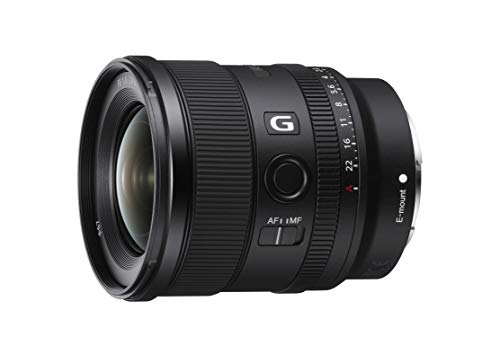
| Sony FE 20mm f/1.8 GBest All-Rounder |
Full-frame E-mount wide prime, f/1.8. | 83/100 | Check Price |
| Nikkor Z 20mm f/1.8 SBest for Nikon |
Full-frame Z-mount wide prime, f/1.8. | 81/100 | Check Price |
 Canon RF 14-35mm f/4L IS USMBest Zoom Option Canon RF 14-35mm f/4L IS USMBest Zoom Option |
Full-frame RF ultra-wide zoom, constant f/4, stabilized. | 78/100 | Check Price |
 Samyang 14mm f/2.8 AFBest Budget Option Samyang 14mm f/2.8 AFBest Budget Option |
Full-frame mirrorless ultra-wide prime, f/2.8. | 75/100 | Check Price |
Detailed Reviews and Top Picks
1. Sony FE 14mm f/1.8 GM
89/100
Best Overall
Key spec: Full-frame E-mount ultra-wide prime, f/1.8.
This ultra-wide prime stays bright at f/1.8 with clean corners and low coma, letting you capture the aurora’s fast movement without excessive exposure times. Its light weight is welcome when working with cold, stiff fingers. Its curved front element makes filters impractical, though filters are rarely needed for aurora work anyway.
- Very bright f/1.8 aperture
- Sharp corners with low coma
- Compact and light for its class
Pros
- Excellent aurora and star rendering
- Wide field for capturing sweeping auroral displays
- Lightweight for cold-weather handling
Cons
- Fixed bulbous front limits filter use
- Premium price
2. Sigma 14mm f/1.4 DG DN Art
86/100
Best for Maximum Light
Key spec: Full-frame mirrorless ultra-wide prime, f/1.4.
Sigma built this lens specifically for astro and night work, and its exceptional brightness captures faint aurora detail with shorter exposures than most alternatives. It handles coma control excellently. It is large and heavy, which becomes more noticeable when handling gear with gloves in freezing conditions.
- Exceptionally bright f/1.4 aperture
- Designed for astro with low coma
- Rear filter holder built in
Pros
- Gathers the most light of any lens here
- Clean stars and aurora detail across the frame
- Astro-focused optical design
Cons
- Large and heavy, harder to handle in extreme cold
- Expensive
3. Sony FE 20mm f/1.8 G
83/100
Best All-Rounder
Key spec: Full-frame E-mount wide prime, f/1.8.
This 20mm balances brightness and practicality, capturing strong aurora detail while doubling as an everyday wide lens for daytime landscape shots on the same trip. Its flat front accepts standard filters if needed. It is not as wide as a 14mm, so the most dramatic, sky-filling aurora displays may need more coverage.
- Bright f/1.8 aperture
- Takes standard front filters
- Compact and light
Pros
- Great for aurora and everyday wide use
- Filter-friendly flat front
- Sharp corners
Cons
- Not as wide as a 14mm for sweeping displays
4. Nikkor Z 20mm f/1.8 S
81/100
Best for Nikon
Key spec: Full-frame Z-mount wide prime, f/1.8.
This Nikon wide prime stays sharp into the corners for aurora work while accepting standard filters for daytime shooting on the same trip. It shows a little coma wide open, a common trade-off for lenses in this brightness and price range.
- Bright f/1.8 aperture
- Sharp corners at high resolution
- Standard filter thread
Pros
- Excellent aurora and star sharpness
- Great everyday wide lens too
- Filter-friendly design
Cons
- Some coma wide open
- Larger than budget primes
5. Canon RF 14-35mm f/4L IS USM
78/100
Best Zoom Option
Key spec: Full-frame RF ultra-wide zoom, constant f/4, stabilized.
For photographers who want flexibility to recompose without changing lenses, this zoom covers a useful range for aurora photography, though its f/4 aperture means longer exposures than a fast prime. It excels as a dual-purpose lens for daytime landscapes on the same aurora-chasing trip.
- Flexible framing for aurora compositions
- Stabilized for handheld daytime shots
- Sharp corners
Pros
- Versatile focal range for different aurora compositions
- Doubles as a strong daytime landscape lens
- Lighter than an f/2.8 equivalent
Cons
- f/4 gathers less light, requiring longer exposures for aurora
6. Samyang 14mm f/2.8 AF
75/100
Best Budget Option
Key spec: Full-frame mirrorless ultra-wide prime, f/2.8.
This budget ultra-wide is an accessible entry point for aurora chasing, offering a wide view at a low price. Its lighter weight is welcome on cold nights. It is dimmer at f/2.8 and shows more coma than premium primes, meaning longer exposures and slightly softer stars at the edges.
- Wide 14mm view
- Affordable astro entry
- Lightweight
Pros
- Cheap way into ultra-wide aurora photography
- Light and easy to handle in the cold
- Decent corner sharpness
Cons
- f/2.8 requires longer exposures than faster primes
- More coma than premium lenses
Frequently Asked Questions
f/2.8 is a practical minimum, and f/1.8 or f/1.4 lets you use shorter exposures that better capture the aurora’s movement and detail.
Ultra-wide focal lengths from 14mm to 24mm are ideal for capturing sweeping auroral displays along with foreground landscape elements.
Filters are rarely needed for aurora work, and a lens hood offers little benefit at night, so most aurora photographers shoot without either.
Extreme cold can stiffen focus rings and cause condensation when moving between temperatures, so allow gear to acclimate gradually and keep spare batteries warm in an inside pocket.
Our Verdict
The Sony FE 14mm f/1.8 GM is our top pick for northern lights photography thanks to its brightness and light weight in cold conditions, while the Sigma 14mm f/1.4 DG DN Art is the runner up for photographers who want the absolute maximum light-gathering ability.